

What Equipment Does a Home Personal Trainer Bring?

Last Updated: November 22, 2026
Quick Summary
A home personal trainer usually brings a small portable kit rather than a full gym. Typical items include resistance bands, adjustable dumbbells or a kettlebell, a mat, a balance pad and a stability ball, chosen around your goals, space and fitness level.
The first visit focuses on assessment before any equipment comes out of the bag.
Portable kits cover strength, cardio and mobility using multi-use items rather than machines.
Ask your trainer in advance what they bring and what you should have ready.
What does your home workout need?
Personal Training Alliance brings the right equipment to your home for strength, cardio and mobility goals.
Table of Contents
What a Home Personal Trainer Brings to Your First Visit
A home personal trainer usually arrives with a small kit rather than a full gym. A personal trainer designs an in-home session around what you can realistically use in your own space, so the equipment you need depends on your goals, your fitness level and the room you train in. (Source: American College of Sports Medicine guidelines)
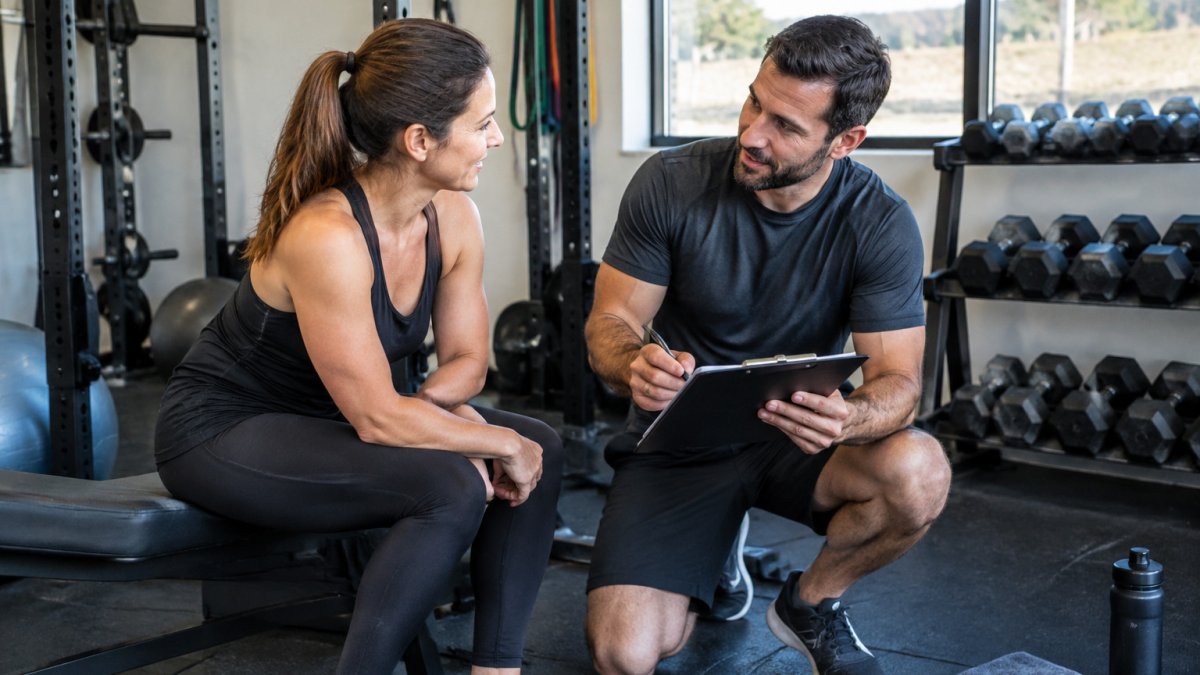
On a first visit, the focus is assessment. Your trainer will ask about your history, your goals and any injuries or limitations, then watch you move through a few basic patterns such as squatting, pushing, pulling and balancing. That assessment decides what comes out of the bag.
Many clients are surprised by how little equipment a good session requires. A trainer may bring a few resistance bands, a set of adjustable dumbbells, a stability ball and a mat. Anything larger, such as a rack or bench, is usually planned around what you already own.
Watch out: do not assume a trainer will bring a full set of weights. Ask in advance what they carry and what you should have ready, so the first session starts on time.
Core Equipment Categories: Strength, Cardio and Mobility
Most in-home sessions draw on three equipment categories. Strength tools build muscle and load the body progressively. Cardio tools raise your heart rate and improve conditioning. Mobility tools help joints move through their full range and support balance.

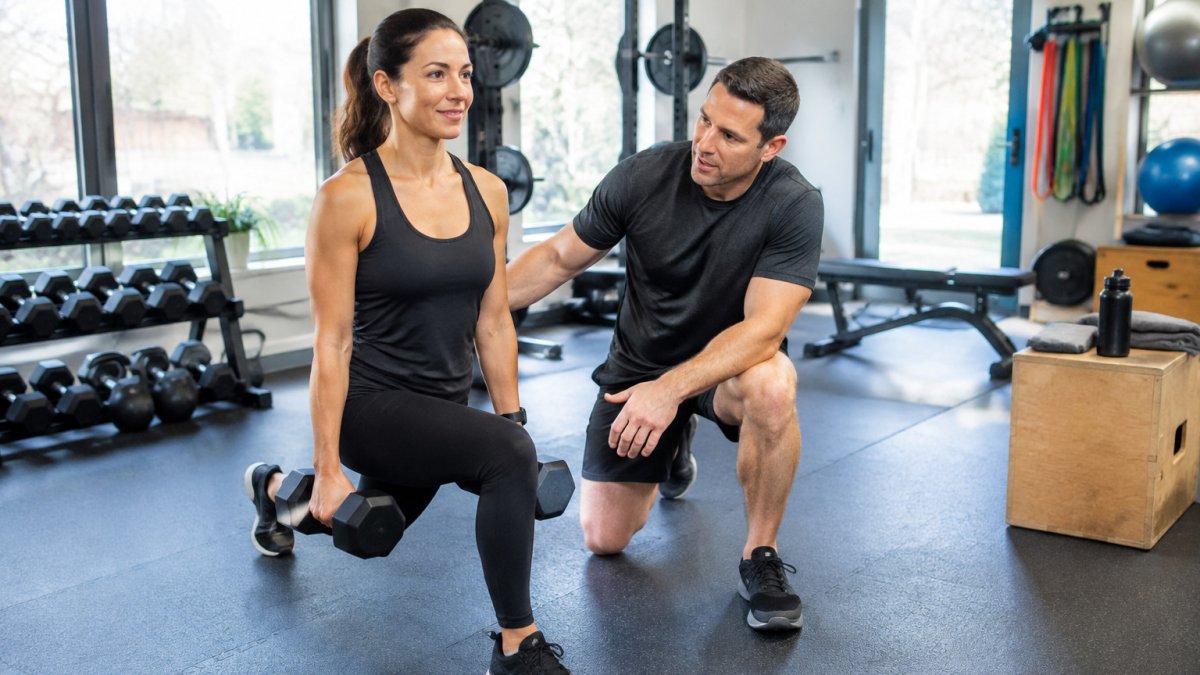
Strength equipment is the most common. Adjustable dumbbells, resistance bands and kettlebells cover most lower-body and upper-body work. These tools let a trainer increase difficulty gradually, which is central to safe progress.
Cardio work at home often needs very little equipment. Jump ropes, step platforms and bodyweight circuits are common choices. Many trainers prefer movement-based conditioning because it requires no machine and fits a small room.
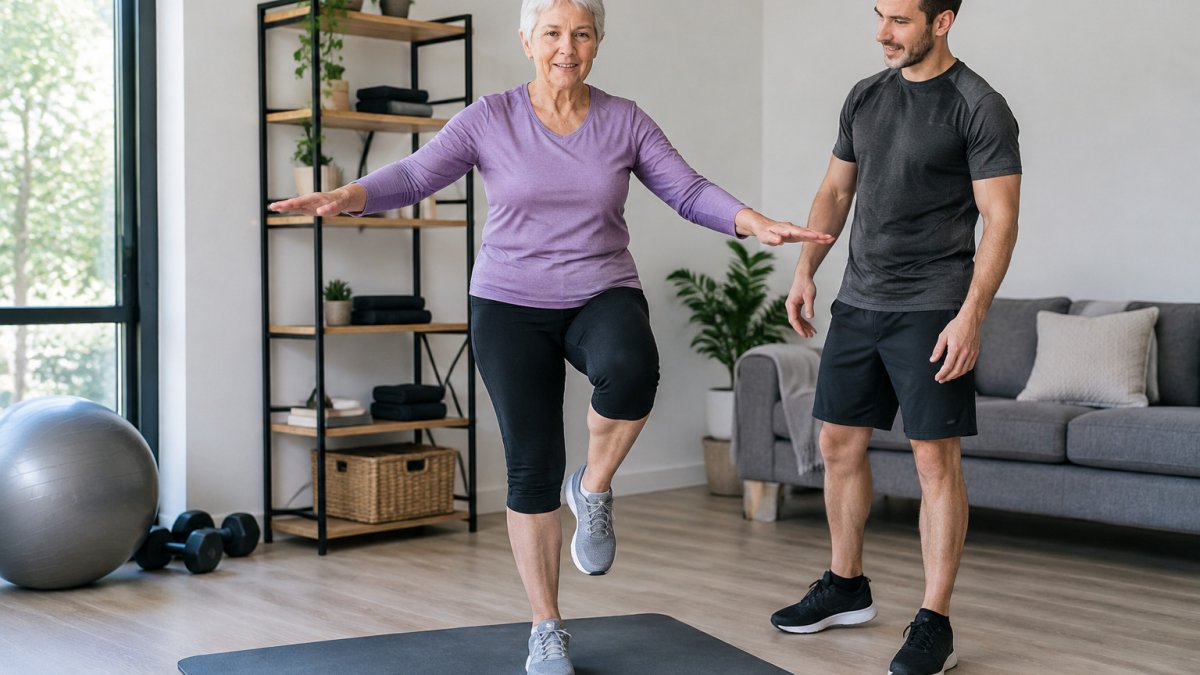
Mobility and balance tools round out the kit. Foam rollers, balance pads and stability balls help clients work on flexibility and control. For older adults or clients returning from injury, these tools often matter as much as the strength work.
Matching each category to a specific goal is a sensible starting point. If your main aim is better balance on the stairs, mobility and stability tools should carry more weight in your plan than heavy loading.
Perrsonal Training Alliance
35 Nutmeg Drive Trumbull, CT.
What Stays in the Trainer's Bag: Portable Workout Equipment
A trainer who works in homes is really running a mobile gym, so the bag is usually built around portability and quick setup, with multi-use items favored over single-purpose machines.
A typical working bag breaks down into four layers:
Resistance layer: loop bands and tube bands with handles in light, medium, and heavy tensions, plus a long flat band for assisted pull-ups and stretching.
Load layer: one or two pairs of adjustable dumbbells, or a single kettlebell in a mid-range weight, so the trainer can scale load up or down without carrying a full rack.
Support layer: a folding exercise mat, a balance pad, and a small stability ball that deflates for transport.
Conditioning and recovery layer: a jump rope, a timer or interval app, a foam roller, and a massage or lacrosse ball.
Portable equipment earns its place by covering many movements. A single kettlebell can train hinging, squatting, carrying, and pressing. Bands can substitute for cable machines on rows, presses, and rotational work. For a balance-focused example, see six cardio exercises using the Bosu ball. A balance pad adds a stability challenge to almost any bodyweight exercise. (Source: benefits of personalized fitness programs)
Setup time matters as much as the contents.
Watch out: do not assume a trainer carries every weight you might need. Ask in advance what they bring and what you should have ready, so the first session starts on time rather than waiting on equipment.
How Trainers Choose Equipment for Your Goals, Space and Fitness Level
Equipment choice is a decision tree, not a shopping list. A trainer walks through four filters in order: the client's goal, the available space, the client's current fitness level, and any injury or medical limitation. Check how much a personal training session costs per hour before choosing a session type. Each filter narrows the kit before the first session is planned.
Goal first. Strength-focused sessions lean on adjustable dumbbells, kettlebells, and bands, because progressive loading is the mechanism that builds muscle. Conditioning-focused sessions need very little: a jump rope, a step or low box, and bodyweight circuits cover most of the work. Mobility and rehabilitation-focused sessions rely on a mat, foam roller, bands, and a balance pad, with load kept light and controlled. A weight-loss plan usually blends strength and conditioning, so the bag carries both layers.
Space second. A small apartment may only allow bands, a mat, and light dumbbells, with movements kept in place. A larger room or garage can support a bench, a rack, or heavier dumbbells. The trainer should design around the room the client actually has, not an ideal gym layout, and should confirm ceiling height for any overhead pressing or jumping.
Fitness level third. Beginners usually start with bodyweight and light resistance so technique is solid before load increases. More advanced clients can progress to heavier tools and more complex movements. The same bag serves both, but the selection within it changes.
Injury and medical history last. A client recovering from a knee injury needs different tools than a former athlete rebuilding strength. Bands and a balance pad often replace loaded squats early in rehabilitation, while a foam roller and mobility work support recovery between sessions.
A common pattern is to match the kit to the session type rather than to the client's entire fitness identity. A strength day and a mobility day can use almost entirely different contents from the same bag. That is why experienced trainers keep the bag lean and modular instead of packing for every possible workout.
A common mistake is buying equipment before a plan exists. Let the assessment guide what you purchase, and ask your trainer which items are worth owning long-term. For clients who want heavier loading or machine-based work, private gym training in or near Trumbull, CT offers a controlled environment where the full range of equipment is already on site.
Booking Your First In-Home Session with Personal Training Alliance
Booking a first session is straightforward. Personal Training Alliance serves Fairfield and New Haven counties with in-home sessions and also offers private gym training in Trumbull, CT, giving clients a private environment if they would rather train outside the home.
Before your first visit, gather a few details: your current routine, any injuries or medical considerations, your schedule and the space where you plan to train. Clear a section of floor large enough to move freely.
If you are looking for a private gym training experience near Trumbull, CT, you can contact us to talk through both options. To get started, contact us to schedule a consultation and talk through what equipment your first session will need.
Frequently Asked Questions
What equipment should a personal trainer have?
A trainer working in a client's home usually carries a compact kit: resistance bands in several tensions, a set of adjustable dumbbells or light weights, a kettlebell, a foam roller or mobility ball, and a sturdy exercise mat. Many trainers also bring a jump rope, stability discs and a pair of cuffs for ankle or wrist work. The exact mix depends on your goals. Strength-focused sessions lean on weights, while balance and mobility sessions lean on bands, stability tools and floor work. Ask your trainer what they plan to bring before the first visit so you know what, if anything, you need to clear space for.
Do I need to provide equipment for an in-home personal training session?
Usually not. A home personal trainer brings the portable equipment needed for the session. What you should provide is a clear, safe space large enough to move in, such as a living room or garage floor, plus access to a chair or wall for support and any water or towels you want. If you already own dumbbells, bands or a mat, mention them to your trainer so they can decide whether to use your gear or bring their own.
Can a personal trainer bring weights to my house?
Yes. Most in-home trainers carry lightweight adjustable dumbbells, kettlebells and resistance bands, since they must fit in a car. Heavier loads like barbells and large racks are generally not practical to transport, so sessions focused on heavy lifting may rely on the weight range the trainer can bring or on equipment already in your home. If you have a specific goal such as building maximum strength, raise it during booking so the trainer can confirm what can be brought to your address.
What is the most useful equipment for home workouts?
For most people, resistance bands, an adjustable set of dumbbells, a kettlebell and an exercise mat cover a wide range of movements at a modest cost. Bands are compact and suit strength, mobility and rehabilitation-style work. Dumbbells allow progressive loading for squats, rows and presses. A mat makes floor exercises more comfortable. Your trainer can help you decide which items are worth buying for your own space and goals, and you can ask about pricing directly from Personal Training Alliance.
Comments