

How Much Does a Personal Training Session Cost Per Hour?

Last Updated: November 21, 2026
Quick Summary
A personal training session cost per hour usually falls somewhere between $70 and $150 for one-on-one sessions, depending on the trainer, format and session length. Always convert quotes to an hourly figure before comparing, because a 30-minute price can cost more per hour than a 60-minute one.
Divide the session price by the session length in minutes, then multiply by 60 to get the hourly rate.
One-on-one gym-based sessions typically run $80-$130 per hour in the illustrative ranges shown.
Semi-private sessions bring the cost per person down to roughly $45-$75 per hour.
Ask whether the quoted hour includes warm-up, assessment, programming and debrief time.
Add gym membership, assessment and minimum-commitment fees to the hourly figure before comparing trainers.
Which training format fits your budget?
Personal Training Alliance offers private gym and in-home sessions across Fairfield and New Haven counties.
Table of Contents
Personal Training Alliance gets asked one question more than any other: what does a personal training session cost per hour? The honest answer is that the price depends on the trainer, the format and the session length, and there is no single figure that applies to everyone. What we can do is show you how to compare offers fairly, so you can judge what you are paying for. This guide covers the factors that move trainer pricing, how to compare 30-minute and one-hour sessions, and how private gym training stacks up against in-home and online options.
What a Personal Training Session Costs Per Hour
Most trainers quote a price per session, and the length of that session is often the detail that gets missed. A session priced at a flat rate for 30 minutes and one priced for 60 minutes are not the same product, even if both are labelled "a session." Start by converting every quote to an hourly figure before you compare.
The formula is simple: divide the session price by the session length in minutes, then multiply by 60. Run every quote through that math before you look at anything else, because the headline number is the least reliable figure on the page.
A Like-for-Like Hourly Comparison
To make quotes comparable, normalize them into four columns: format, session length, price per session, and price per hour. The table below shows representative patterns most practitioners report across the market. Treat the figures as illustrative ranges for comparison, not as a quote for any specific trainer.
Format | Typical session length | Price per session | Effective price per hour |
One-on-one, independent trainer | 60 min | $70-$110 | $70-$110 |
One-on-one, gym-based trainer | 60 min | $80-$130 | $80-$130 |
One-on-one, in-home | 60 min | $95-$150 | $95-$150 |
Semi-private (2 clients) | 60 min | $45-$75 per person | $45-$75 per person |
Small group (3-6 clients) | 45-60 min | $25-$45 per person | $30-$60 per person |
Online live coaching | 30-45 min | $30-$60 | $40-$80 |
Online programming only | n/a | $50-$200 per month | Not hourly, price per month |
Why the Hourly Figure Still Isn't the Whole Story
Two trainers can quote the same $100 per hour and deliver very different amounts of coaching. Ask what the hour includes: warm-up, equipment setup, a written program, a movement assessment, and a short debrief all consume time. A trainer who counts only the working sets inside the hour is effectively charging more per minute of coaching than one who includes preparation and follow-up.
Watch out: a low hourly rate can hide a required gym membership, an assessment fee, or a minimum session commitment. Add those costs to the hourly figure before you declare a winner.
A Transparent Methodology
Ask each trainer for their rate in writing and confirm whether it covers planning, assessment, and follow-up time or only the hour you spend face to face. If a quote seems unusually high or low for its format, ask what accounts for the difference.
Factors That Change Trainer Pricing
Several variables shift what a trainer charges. Experience and specialization carry real weight: a trainer with years of practice and a focus such as senior fitness or post-rehabilitation work usually prices higher than a newer generalist. Credentials matter too, though a longer list of certificates does not automatically mean better results for your goals.
Location is another driver. Trainers in higher-cost areas generally charge more to cover facility rent, travel and overhead. Format changes the number again. Private sessions cost more per hour than semi-private or group sessions, because one trainer's time is split across fewer people in those formats.
Package deals are the most common way to lower the per-session price. Buying a block of sessions in advance often brings the hourly rate down, but check the expiry date and cancellation terms before you commit.
Comparing 30 Minute and One Hour Sessions Fairly
A 30-minute session priced at half the cost of a one-hour session is not automatically a bargain. The useful comparison is price per hour, and the shorter session can be the more expensive option.
Also ask what the time includes. Some trainers count warm-up, equipment setup and a short debrief inside the session. Others start the clock only when the workout begins. A 45-minute session with full coaching time may deliver more value than a 60-minute session where a quarter of the hour is spent on paperwork.
Think about how often you need to train, too. Two 30-minute sessions a week may suit a short-term goal, while a single longer session may work better if you prefer fewer, more focused visits.
Perrsonal Training Alliance
35 Nutmeg Drive Trumbull, CT.
Private Gym Personal Training Versus In-Home and Online Options
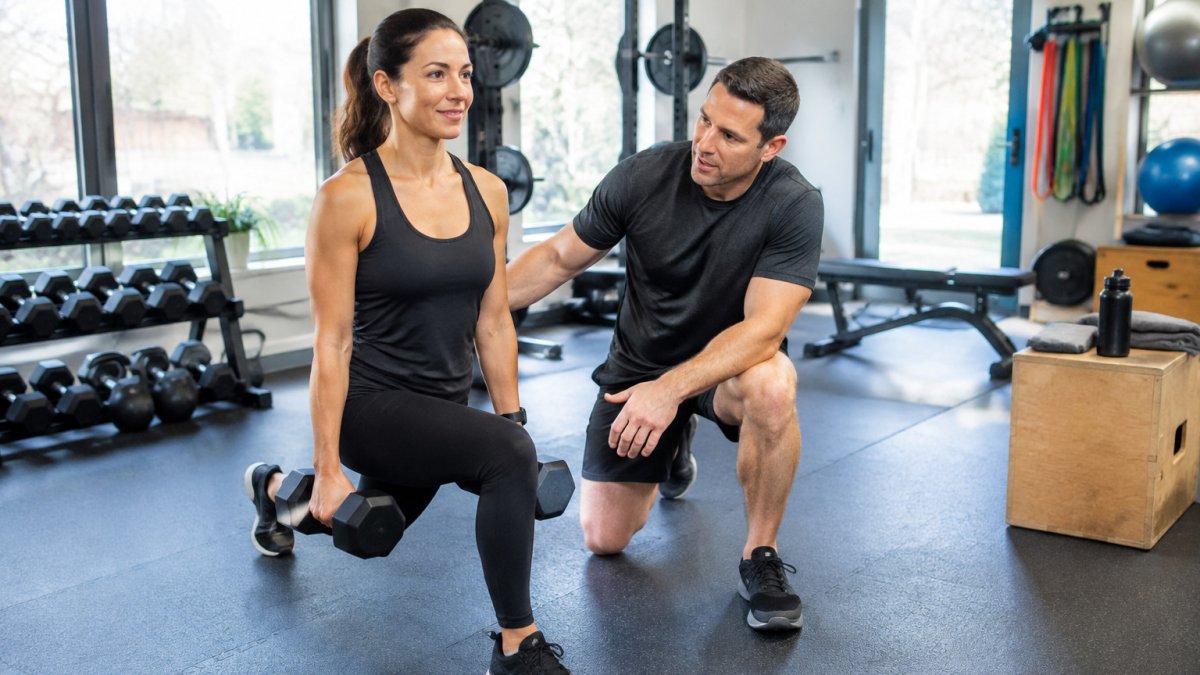
Private gym training gives you a controlled setting with equipment, a dedicated space and few distractions. Many people who feel intimidated by large public gyms find a private room easier to work in. For clients in Trumbull, CT, our private gym option is one way to train with a certified professional in a focused environment. Readers who want to see how this format works can explore our personal training options in Trumbull, CT.

In-home training removes the travel time, which is a real advantage for busy schedules. In-home sessions involve travel to you, so the trainer's time and costs differ from a private gym session. The trade-off is convenience against the cost of getting a trainer to your door. For a clear picture of what that premium covers, read our guide to what an in-home personal trainer cost really includes.
Online coaching is typically the least expensive per hour, but it asks more of you. You will need to self-check your form, manage your own accountability and keep track of progress. Online coaching differs from self-guided plans in one key way: a live online coach reviews your performance and adjusts your programme, while a self-guided plan does not. Know which one you are buying before you sign up.
What the Average Cost of a Personal Trainer Per Month Looks Like
Monthly cost depends on how many sessions you book. A client training once a week will pay roughly four sessions' worth in a month, while someone training three times a week pays about twelve. Multiply your per-session rate by your planned frequency, then add any extras such as nutrition guidance or gym membership fees if the trainer does not include them.
The more useful exercise is to build a sample monthly budget for each frequency so you can see the trade-off between cost and coaching density before you commit.
Sample Monthly Budgets by Training Frequency
Using a mid-range one-on-one rate of $90 per hour, here is what a month looks like at different frequencies. The figures are illustrative and assume four weeks per month.
Frequency | Sessions per month | Monthly cost at $90/session | What it typically buys |
Once a week | 4 | $360 | Program design plus a weekly form check; you train alone the rest of the week |
Twice a week | 8 | $720 | Enough contact to correct habits between sessions |
Three times a week | 12 | $1,080 | Closely supervised training for a focused block |
Hybrid (1 in-person + 2 online) | 4 in-person + 8 online | $360 + online fee | In-person technique work plus remote accountability |
Add any facility membership, assessment, or programming fees on top to see the full monthly figure.
When Weekly Sessions, Occasional Coaching, or a Hybrid Plan Offer Better Value
Cost-effectiveness depends on your goal, not on the number of sessions. A common pattern is that clients new to training benefit most from frequent early sessions to build technique, then step down to weekly or biweekly check-ins once the habit is set. Someone returning from an injury may need closer supervision for longer. A client with a clear program and good self-discipline may get more value from one monthly session plus online check-ins than from three weekly sessions they cannot sustain.
Run the math against your actual goal. If your goal is a specific event in 12 weeks, the cost per week of a focused block may be easier to justify than an open-ended monthly commitment. If your goal is general health, a lower-frequency plan you will actually keep is usually the better value.
Budget for the Months You Cannot Train
Cancellation policies, missed sessions, and holidays all change your real monthly spend. Ask how sessions are billed when you cancel, whether unused sessions in a package expire, and whether a missed session can be rescheduled within the same month. A plan that looks affordable at 12 sessions a month can become expensive if four of those sessions are lost to a travel week and the policy does not allow a make-up.
Watch out: some monthly plans auto-renew and charge whether or not you attend. Confirm the renewal terms in writing before the first payment.
Full Cost of Ownership
The advertised session rate is only one line in the budget. Build the full monthly figure from five parts: session fees, facility or gym access, any assessment or onboarding fee, travel or parking if you go to a trainer, and programming or app fees for online components. Comparing trainers on the session rate alone is the most common budgeting mistake readers make, and it is the one that most often turns a cheap quote into an expensive month.
Weighing a 12 Week Personal Training Program Cost
Some clients commit to a fixed programme, often around 12 weeks, rather than paying session by session. Divide any programme price by the number of sessions included to get an hourly figure, then compare that with your session-by-session quote.
Consider what the programme includes. A 12-week plan that covers assessment, a written programme, check-ins and nutrition guidance is a different product from a block of bare sessions. Compare the full package, not just the headline price. If you are unsure whether a longer commitment suits you, ask about a shorter trial period first.
Choosing a Trainer and Booking Your First Session
Before you book, ask any trainer for their credentials, their experience with clients who have goals like yours, and how they handle cancellations. Ask whether their quote covers planning time and whether your first session includes an assessment. A good trainer will answer these questions plainly.
At Personal Training Alliance, we would start with a short conversation about your goals, your schedule and your budget, then recommend the format that fits. Book your in-home personal trainer consultation to discuss which option makes sense for you. If you are still comparing trainers, our guide on how to choose a personal trainer for weight loss covers the questions worth asking.
Frequently Asked Questions
Is $300 a month a lot for a personal trainer?
Whether $300 a month is a lot depends on how many sessions it buys and what you get in return. Compare the monthly figure against the number of sessions it buys. Check the hourly equivalent before comparing. Ask the trainer what each session includes, such as programming, assessment and check-ins between sessions.
How much is a 30 minute personal training session?
A 30-minute session often costs less than a one-hour session, but the price depends on the trainer and the format. The price depends on the trainer's experience, the session format and whether you train one-on-one or in a small group. To compare fairly, divide the session price by the length in hours to get an hourly rate, then compare that figure against one-hour rates from other trainers. Confirm current pricing directly with the trainer or provider.
Is it cheaper to buy personal training sessions in a package?
Packages are often cheaper per session than booking individually, but the savings only matter if you will use every session before it expires. Read the cancellation and expiration terms before you pay, since some packages cannot be paused or refunded. Compare the package's hourly equivalent with single-session pricing, and ask whether the package includes assessments, programming or nutrition guidance. A lower per-session price with no added value is not necessarily the better deal.


Comments